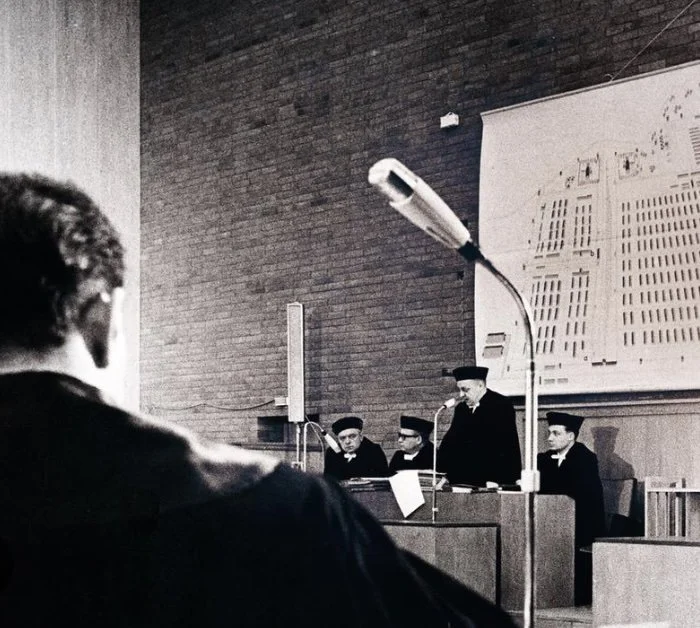
Bearing witness as a Boundary Case: Survivor Testimony, Legal Testimony, and Historical Testimony
in The Palgrave Handbook of Testimony and Culture. Ed. Sara Jones, Roger Woods. Palgrave Macmillan 2023:
By examining the metamorphoses of the testimony of survivor-witnesses in court and in the writing of history, Weigel replaces so-called aporias (the ‘crisis of representation’, the problem of ‘subjectivity’) by an analysis of the survivor-witness, characterised by immediacy (Benjamin and Améry), as a boundary case of law and justice (referring to Arendt) and of law and history (referring to the paradigmatic role of the Nuremberg trials, the Eichmann trial and the witness as media figure). It rejects the ‘crisis of truth’ by unpicking the idea of ‘the truth’ (with Benjamin). And it criticises the pathos formula of an ‘event without a witness’ (Agamben), which disregards the testimonies of non-survivors, such as the Auschwitz scrolls.
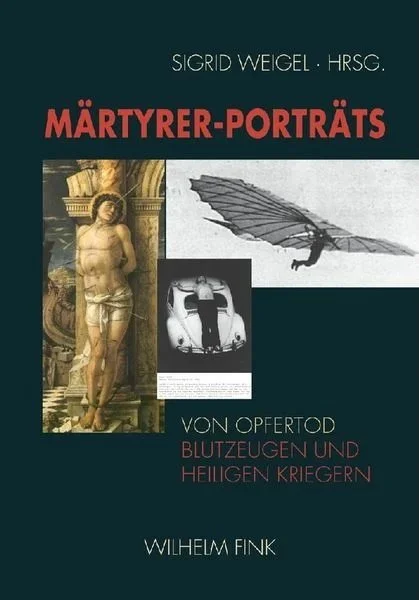
Märtyrer-Porträts. Von Opfertod, Blutzeugen und heiligen Kriegern
Mit Selbstmordattentätern, die sich als Märtyrer verstehen und inszenieren, ist nicht nur die Religion in die Politik zurückgekehrt, sondern auch eine Figur auf den Schauplatz der Geschichte getreten, von der das säkulare Europa annahm, dass sie längst vergangenen Zeiten angehöre.
Als eine Art Anti-Martyrologium versammelt der Band Porträts von Märtyrerfiguren in verschiedenen Religionen, in Kunst, Film, Wissenschaft und Politik von der Antike bis in die Zeitgeschichte.
Testimony/Bearing Witness. Epistemology, Ethics, History and Culture
Ed. Sybille Krämer & Sigrid Weigel. London: Rowman & Littlefield 2017.
The volume bridges the yet separated perspectives of the philosophy of testimony and the post-holocaust-research. It provides a dialogue of approaches to bearing witness/ testimony in epistemology, historiography, law, art, media and psychiatry.
What is the epistemological value of testimony? What role does language, images, and memory play in its construction? What is the relationship between the person who attests and those who listen? Is bearing witness a concept that is exclusively based in interpersonal relations? Or are there other modes of communicating or mediating to constitute a constellation of testimony? – With examples including the Holocaust, the Warsaw ghetto, the Khmer Rouge and the Armenian genocide.
pdf der deutschen Version des Artikels in: Zeugen der Kunst. Hgg. von S. Krämer/ S. Schmidt. Paderborn: Fink 2016:
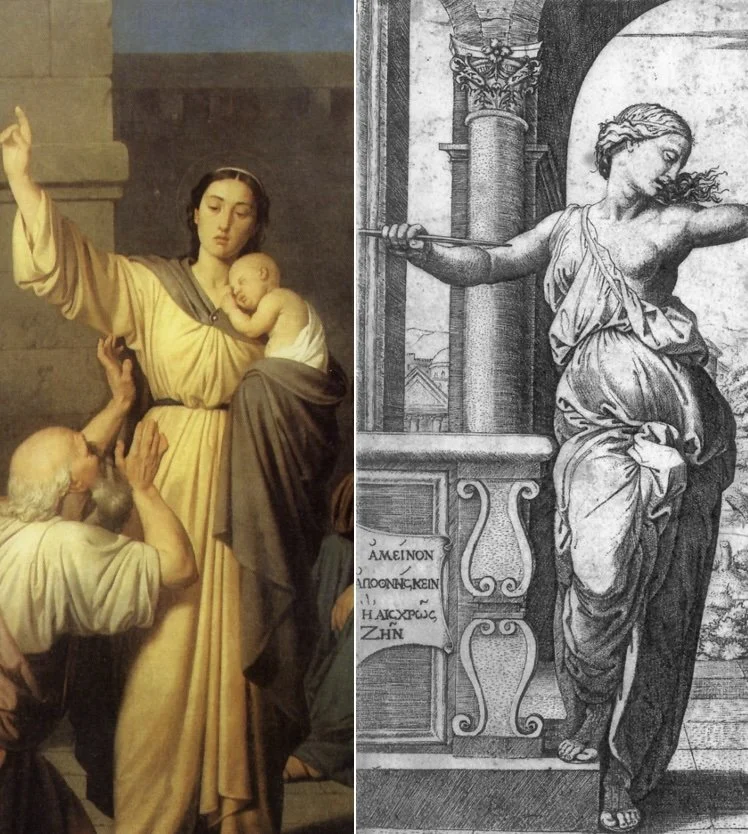
Exemplum and Sacrifice, Blood Testimony and Written Testimony: Lucretia and Perpetua as Transitional Figures in the Cultural History of Martyrdom.
in: Perpetua's Passions. Multidisciplinary Approaches to the Passio Perpetuae at Felicitatis. Ed. by J.N. Bremmer and M. Formisano. Oxford UP 2012:
The article questions a common thesis of the historiography of martyrdom, i.e. the uniqueness of martyrdom in Christianity and the notion that a selfsacrifice or “dying for a cause” was alien to both the Greek and the Jews. Since in Tertullian’s famous Ad martyres Lucretia is presented as an exemplum of former martyrium to the early Christian martyrs persecuted by the Roman Empire, her case is compared with that of Perpetua.
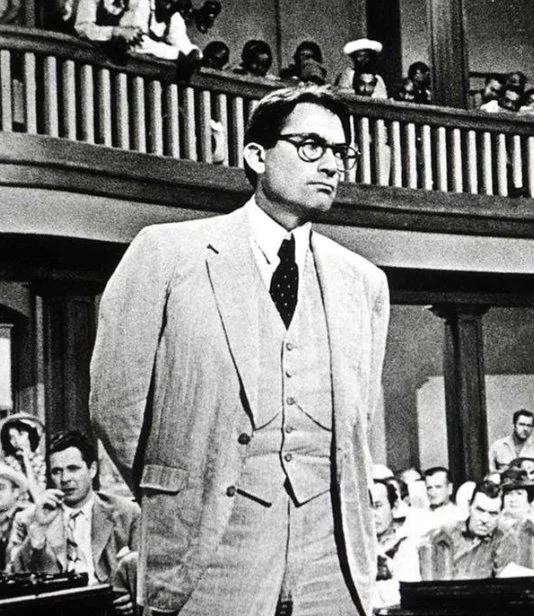
Zeugnis und Zeugenschaft. Klage und Anklage. Zur Geste des Bezeugens in der Differenz von identity politics, juristischem und historiographischem Diskurs.
in: Zeugnis und Zeugenschaft. Einstein Forum Jahrbuch 1999. Berlin 2000. Hier geht’s zum Download des pdf: