Traces and Transitions to Hannah Arendt’s unwritten book of love
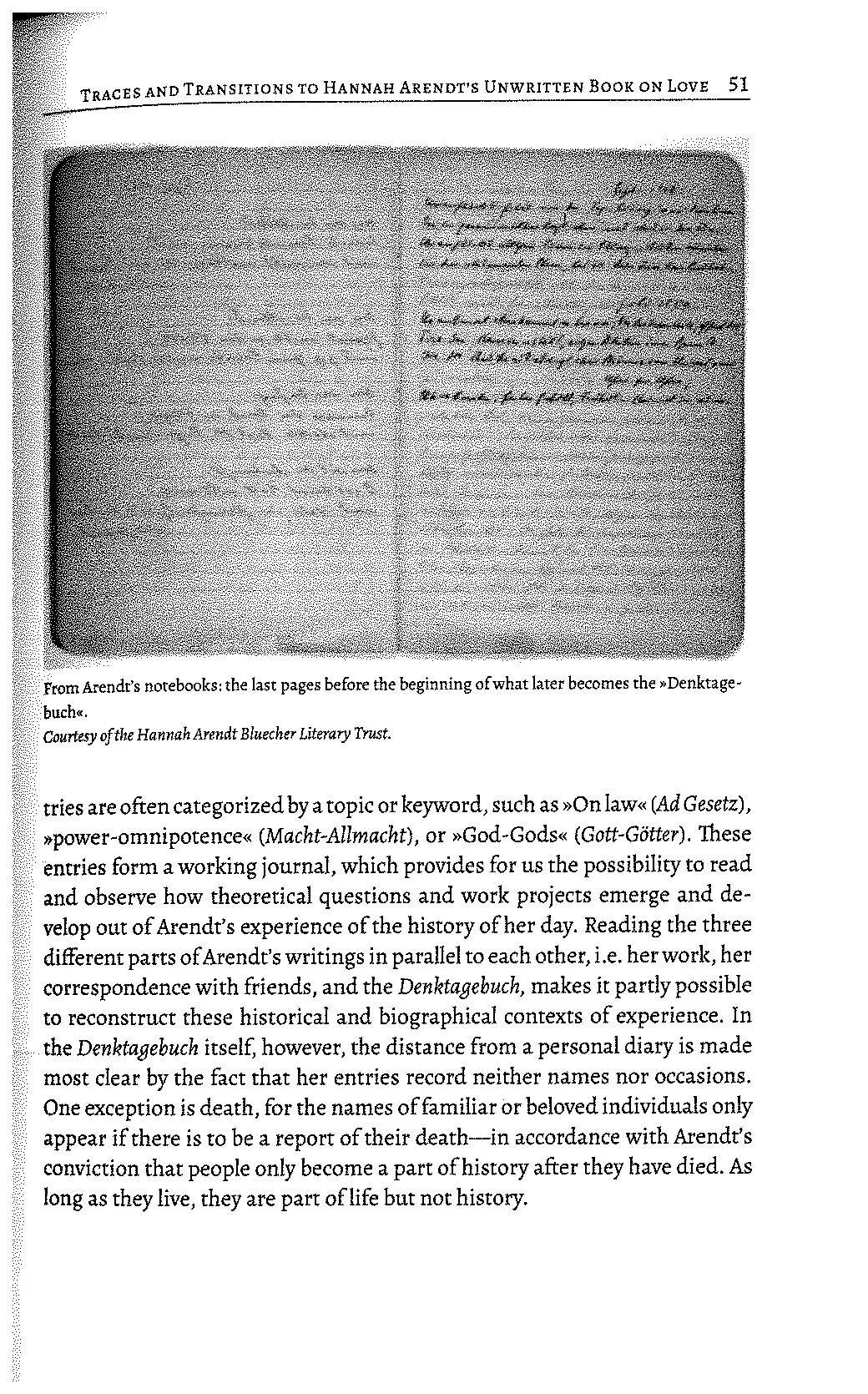
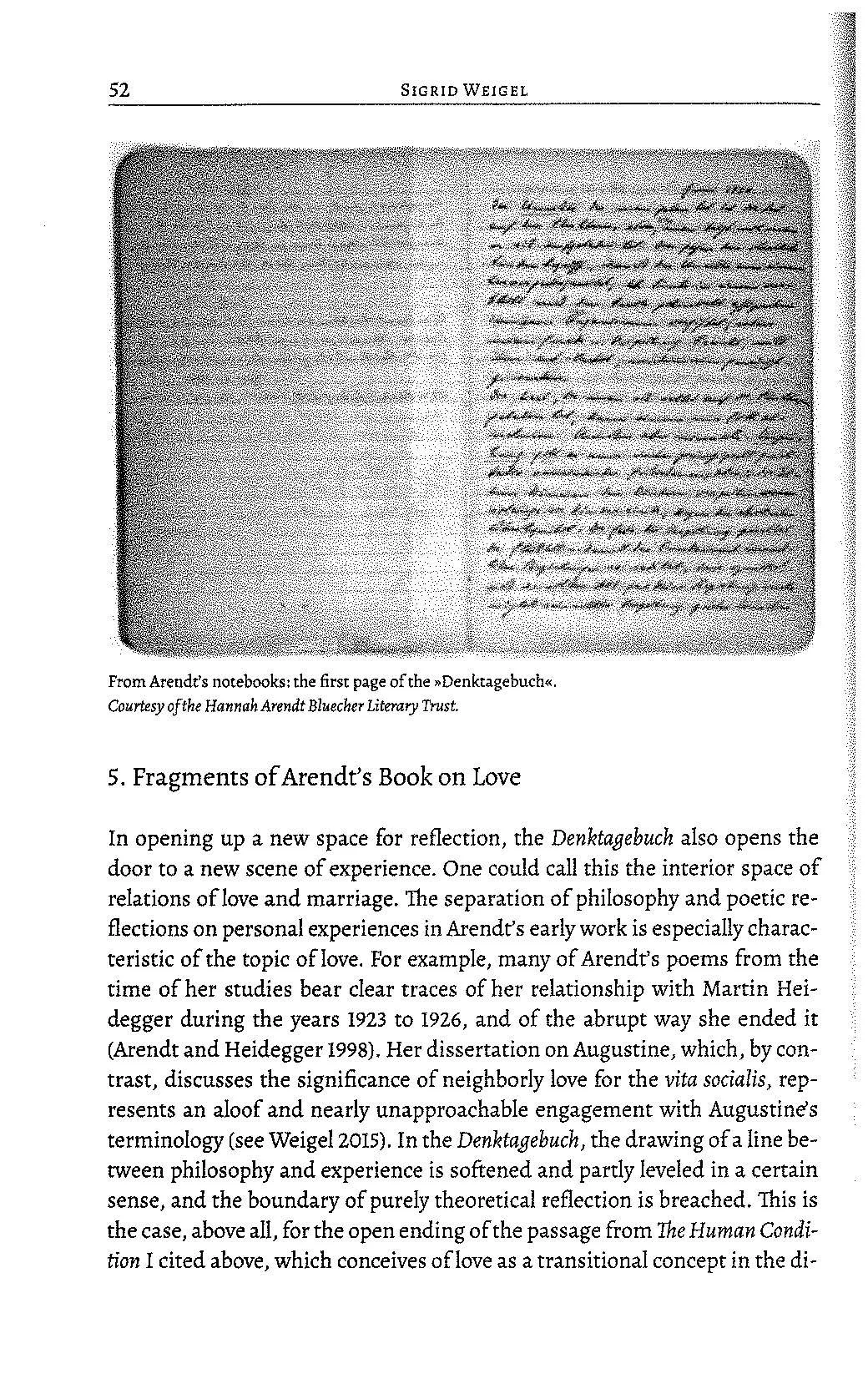
Although Arendt’s oeuvre commences with a book on the concept of love (in Augustin) she never published a book on love. Yet, Arendt’s unwritten book on love does exist in a concealed and fragmented form, especially in a series of fascinating entries of her Denktagebuch. Whereas Arendt’s early writings on love form a juxtaposition – philosophy (her dissertation) on the one side, private entries often using poetic language (her notebooks) on the other side –, the Denktagebuch marks a clear caesura, in that it opens a new space of thinking: a space in-between as the possibility of another reflection on love.
The existing scholarship on love in Arendt’s writing approaches the topic either from an autobiographical viewpoint (with emphasis on her relationship to Heidegger) or examines her philosophy of love systematically, opposing the ‘love of neighbor’ (Nächstenliebe) and the passionate love. The article, in contrast, reads Arendt’s writing on love as thinking in transition, at the threshold of experience and thoughts, and as a boundary concept, which has fundamental effects on its shape and character within the dialectics of privacy and the public realm, of intimacy and human affairs.
(in: “Faith in the World”. Post-secular readings of Hannah Arendt. Ed. by Rafael Zawisza/ Ludger Hagedorn. Frankfurt/ New York: Campus 2021, S. 37-60.
Video des Vortrags: